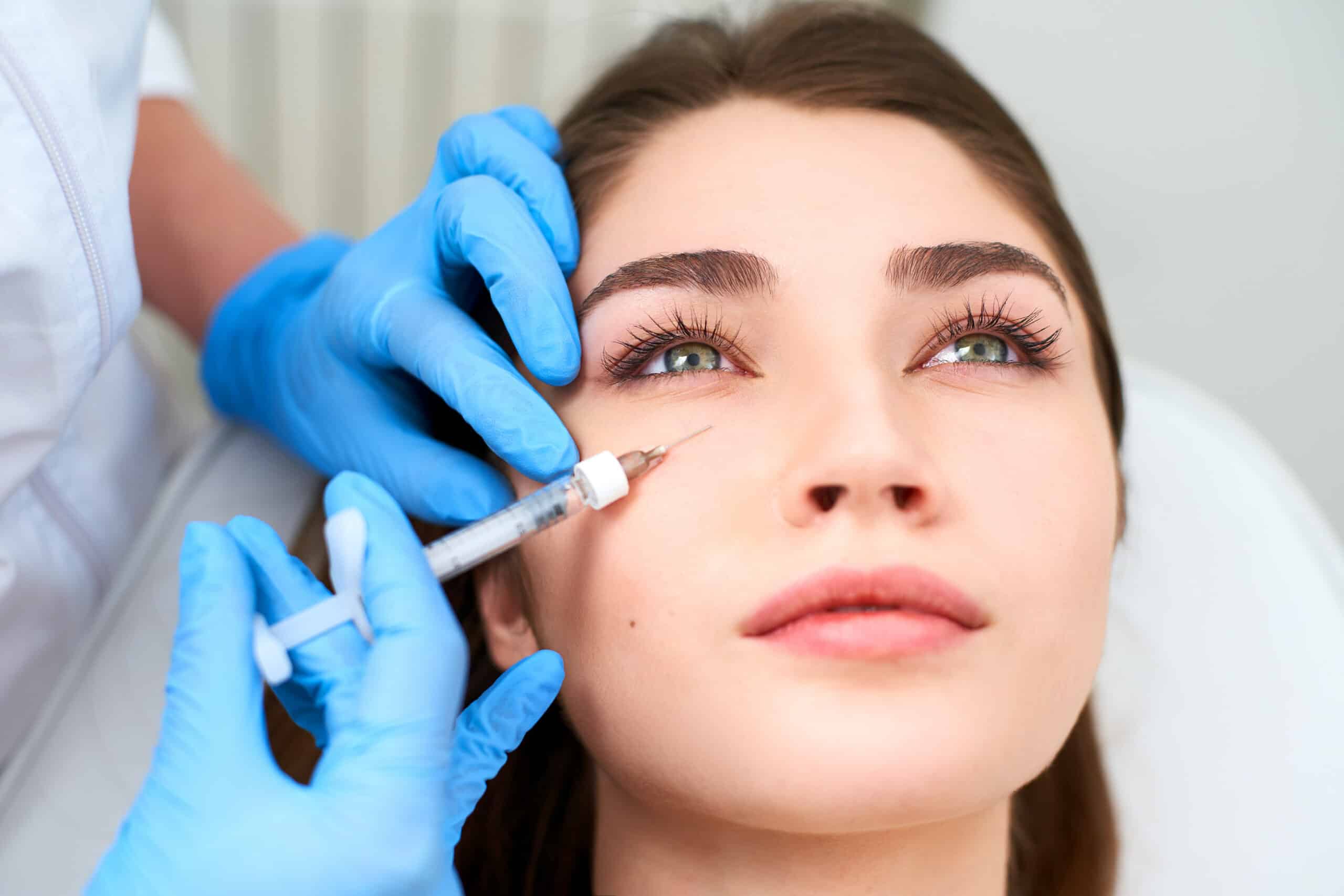
A dark under-eye is not automatically a volume deficit
At Dr. Orhan Demirer’s dermatology practice in Alsancak, the lower-eyelid area is assessed by separating a true tear-trough hollow from bags, malar oedema, pigment, visible vessels, thin or lax skin and previous filler. Under-eye filler may soften a selected shadow, but it does not whiten the skin or correct every tired-looking eye.
- Hollow and shadow distinguished from bags and swelling
- Pigment, vessels and skin quality assessed separately
- Previous filler and morning oedema reviewed before any top-up
- Low-volume planning, alternatives and vision risk discussed clearly
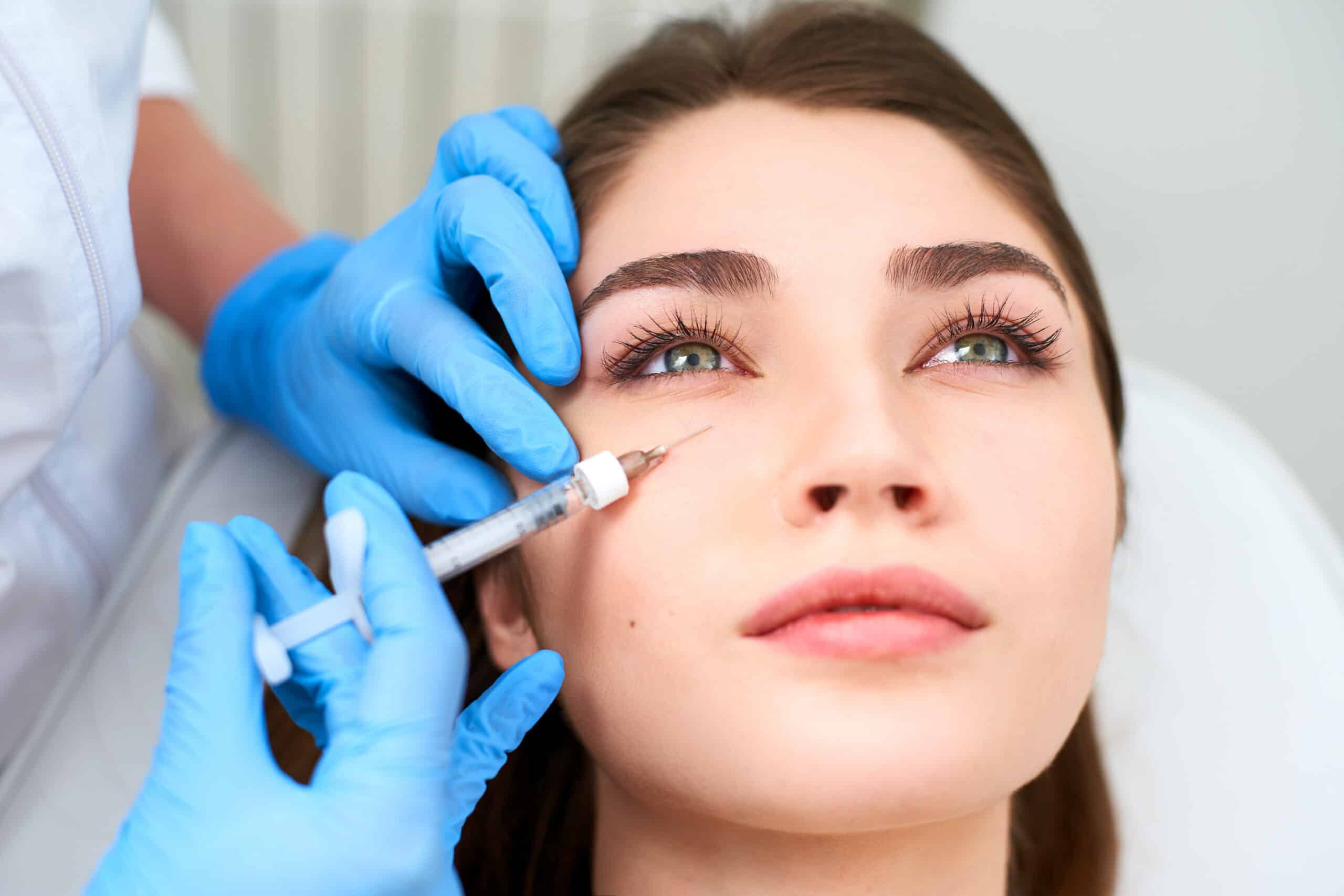
What is creating the tired or dark appearance?
Hollow or bag shadow?
A protruding lower-eyelid bag can create a shadow beneath it that resembles a volume deficit.
Shadow, pigment or vessels?
Brown pigment and blue-purple vascular show-through do not respond like a light-related hollow.
Morning or intermittent swelling?
Oedema, allergy, lymphatic tendency or hydrophilic old filler can make new product unsuitable.
Is previous filler present?
Unknown product, persistent material, migration or swelling should be understood before any top-up.
“Light filler” is a marketing term—not a separate filler substance
In everyday use, “under-eye light filler” describes a hyaluronic-acid filler selected to soften a suitable tear-trough or lower-eyelid-to-cheek hollow. It does not contain light and does not bleach or whiten the skin.
The lower eyelid is thin, mobile and anatomically complex. The useful target is not “all darkness”; it is a limited volume-related contour that can be improved without increasing bags, oedema, visible product or lower-eyelid heaviness.
If most of the darkness remains when the shadow changes with lighting or the skin is gently repositioned, pigment, vascular colour or skin quality may be more important than volume.
Why can the under-eye look hollow, dark, puffy or tired?
More than one factor can coexist. The plan follows the dominant cause rather than the label “dark circles.”
True tear-trough hollow
A limited depression from the inner lower eyelid toward the cheek creates a light-dependent shadow and may be assessed for subtle volume support.
Lower-eyelid bag
A bag projects forward and casts a shadow beneath it. Filling the border can make the area heavier or merely camouflage a limited transition.
Malar or lower-eyelid oedema
Morning swelling, intermittent puffiness or lymphatic tendency is not missing volume. Hydrophilic filler can worsen it.
Pigment and vessels
Brown tone may reflect pigment; blue-purple tone may reflect vessels or deeper tissue through thin skin. Filler is not a colour treatment.
Thin, crepey or lax skin
Fine lines, photodamage, eczema and skin laxity need a different plan. Superficial product can become visible or irregular.
Old filler or inflammation
Persistent product, migration, blue-grey colour, nodules or delayed swelling can mimic a new hollow and should be diagnosed first.
What under-eye filler may improve—and what it cannot reliably treat
Selected goals that may be assessed
- Soften a limited true tear-trough hollow
- Reduce a shadow caused mainly by contour difference
- Improve the lower-eyelid-to-cheek transition in suitable anatomy
- Reduce a confirmed side-to-side volume difference
- Create a subtle, temporary change without flattening every contour
Problems filler does not directly solve
- Brown pigment or blue-purple vascular colour
- Prominent eye bags or persistent malar oedema
- Advanced skin laxity or inadequate eyelid support
- Eczema, allergy, irritation or active skin disease
- Every fine line, sleep-related appearance or medical cause of darkness
The aim is not to make the lower eyelid completely flat. Natural lid–cheek anatomy and facial expression should remain visible; the smallest useful intervention is often safer than chasing complete correction.
Who may be considered—and when treatment may be postponed
Assessment may be relevant for
- A limited and true lower-eyelid-to-cheek hollow
- A shadow that changes meaningfully with lighting
- Little or no persistent bag or oedema tendency
- Reasonable lower-eyelid and anterior-cheek support
- A subtle, staged and temporary change that matches expectations
- An adult able to maintain urgent contact and follow-up
Delay or another pathway may be needed
- Prominent bags, persistent swelling or weak lower-eyelid support
- Pigment or vessels more important than a volume deficit
- Active infection, wound, eczema or significant irritation
- Unknown old filler, new lump, blue-grey colour or unexplained swelling
- Pregnancy or breastfeeding for an elective procedure
- Expectation that filler will whiten skin or remove every line
Share medicines, supplements, allergies, bleeding history, thyroid or inflammatory conditions, eye disease, previous eyelid surgery, filler, dissolving, laser and dental plans. Do not stop prescribed medicines on your own.
Direct tear-trough filler, cheek support—or no filler?
| Approach | Main target | May be relevant when | Important limitation |
|---|---|---|---|
| Direct under-eye HA filler | A selected tear-trough hollow in thin tissue | The deficit is limited, bags/oedema are minimal and the product fits the indication | Can become visible, lumpy or swollen; does not treat pigment or bags |
| Anterior cheek support | Midface support beneath the lower eyelid | Loss of support from below is contributing to the lid–cheek transition | Can widen or overfill the midface and does not correct every direct trough |
| Combined staged plan | Confirmed cheek and tear-trough components | Conservative cheek support is reassessed before any small direct treatment | Should not be an automatic multi-syringe package |
| No filler / other assessment | Bags, oedema, pigment, vessels, skin laxity or medical cause | Volume is not the dominant problem or risk outweighs likely benefit | Another dermatological, ophthalmic or surgical pathway may be more relevant |
Not every HA filler is designed for the under-eye area
HA fillers differ in elasticity, cohesivity, water attraction, tissue integration and approved anatomical use. Thin lower-eyelid tissue makes these differences clinically visible.
If treatment is appropriate, a product whose current indication, tissue behaviour and low-volume suitability fit the target is considered.
These are delivery tools. Neither is automatically safer for every target and neither eliminates vascular or visual risk.
The US FDA has authorised specific fillers for under-eye hollows in defined adult populations. This is not blanket approval for every filler or technique.
The exact product’s current Türkiye instructions, approved site, contraindications and local regulation take priority for clinical use.
The sealed product, name, lot, amount and target should be documented. Brand recognition alone does not prove suitability.
Permanent, biostimulatory, calcium-hydroxyapatite, hybrid or unknown fillers are not presented here as routine direct under-eye products.
See the current FDA dermal-filler guidance and a recent product-specific US under-eye label. Product information and regulation applicable in Türkiye take priority.
An expired marketing duration does not prove that old filler has disappeared
Under-eye HA may remain, shift or retain water after its visible benefit seems reduced. Adding new product without understanding the existing material can worsen puffiness and irregularity.
Identify what was done
The date, product, amount, technique, previous dissolving and older photographs are reviewed. Product labels are useful when available.
Separate filler from anatomy
Morning swelling, blue-grey hue, palpable edge, asymmetry, nodules, redness and tenderness are assessed rather than labelled a new hollow.
Observe, investigate or treat
Depending on findings, observation, records, imaging where relevant, HA-filler reduction or another plan may be more appropriate than a top-up.
Hyaluronidase is not an automatic cosmetic reset. It acts on HA, has its own risks and cannot guarantee the exact pre-filler appearance or reverse non-HA materials in the same way.
How does an under-eye filler assessment proceed?
Define the concern
Hollow, darkness, puffiness, bag, lines or asymmetry is translated into a specific visible target.
Medical history
Medicines, allergies, eye/skin conditions, surgery, old filler, swelling and dental plans are reviewed.
Static and dynamic exam
The lower eyelid is viewed from the front, oblique and side at rest and during smiling.
Cause separation
Hollow, bag, oedema, pigment, vessels, skin and cheek support are distinguished.
Options and consent
Direct filler, cheek support, another assessment or no procedure is discussed with limits and risks.
Product and amount
If suitable, the traceable HA, target layer and lowest reasonable volume are agreed.
Injection and observation
Needle and/or cannula placement follows the plan while circulation, vision-related symptoms and tissue response are monitored.
Written follow-up
Expected swelling, urgent warning signs and the appropriate review interval are explained.
Recovery, settling and duration after under-eye filler
The timeline below is illustrative. Product, amount, old filler, oedema tendency and individual healing can change it.
Added contour may be visible with redness, tenderness, entry marks and early swelling.
Swelling and bruising can increase or fluctuate, and the two sides may settle at different rates.
As oedema reduces, shadow and lid–cheek transition are judged more accurately. Early top-up is avoided.
The effect is temporary but variable. Remaining product and current oedema are examined before maintenance.
A selected hollow and the shadow directly caused by that contour difference.
Pigment, visible vessels, bags, skin lines, laxity or medical causes of darkness.
No swelling, exact symmetry, a fixed duration or complete erasure of the natural lower-eyelid transition.
Do not massage or “spread” under-eye filler at home
The treating physician’s individual instructions take priority. Do not press, rub, mould or repeatedly test the area unless specifically advised for a defined finding.
A clean cool compress may be suggested for comfort. Follow personal instructions for makeup, exercise, heat, alcohol, sleeping position, skin products, dental work and other facial procedures.
- Do not judge the result from treatment-day swelling.
- Do not massage a lump or puffiness without assessment.
- Keep hands and unclean objects away from entry points.
- Do not self-prescribe medicines or stop prescribed treatment independently.
- Report increasing redness, warmth, discharge, fever or unusual swelling.
- Keep urgent contact and emergency instructions available.
Common reactions, persistent oedema and vascular or visual emergencies
Under-eye filler is a medical injection in thin tissue close to the eye. Careful selection and technique reduce risk but cannot make the procedure risk-free.
Common and usually temporary
Swelling, bruising, redness, tenderness, entry marks and early asymmetry may occur. A tear-trough meta-analysis reported swelling/oedema and bruising among the more frequent adverse events.
Persistent or delayed problems
Prolonged oedema, visible or palpable product, contour irregularity, blue-grey Tyndall effect, infection, nodules, delayed inflammation, migration and an unsatisfactory result may require assessment.
Possible blood-flow problem
Unusual or increasing pain, blanching, white-grey-blue or mottled skin, coolness, delayed capillary refill, blisters or a worsening dusky area requires immediate contact and urgent assessment.
Vision or neurological symptoms
Sudden blurred, double or lost vision; eye pain; eyelid droop; difficulty moving the eye; severe headache; weakness or speech difficulty is an emergency requiring immediate medical care.
Safety content was cross-checked against current FDA guidance, a tear-trough HA filler efficacy and safety meta-analysis and a published consensus on reducing embolic visual risk. Current Türkiye product information and emergency pathways take priority.
If filler is unsuitable, which direction may be discussed?
| Dominant concern | Assessment direction | Why filler may be limited | Important note |
|---|---|---|---|
| Brown pigment | Sun protection, irritation control and cause-specific dermatological assessment | Filler does not remove pigment | Not every lightening product or device is safe near the eye |
| Visible vessels / thin skin | Skin type and vascular source assessment; selected device options if appropriate | Added volume does not remove vascular colour and superficial HA may remain visible | Eye protection and previous filler matter for energy procedures |
| Bags or laxity | Lower-eyelid support, skin excess and specialist surgical assessment where relevant | Filler can increase heaviness or only camouflage a narrow transition | No procedure may be preferable to poor-risk camouflage |
| Oedema or old filler | Swelling pattern, medical causes, product records and targeted investigation | New hydrophilic product can worsen fluid retention | Observation or HA reduction may be considered only after diagnosis |
Under-eye filler prices in Izmir
Pricing depends first on whether filler is actually appropriate. The selected traceable product, amount, bilateral needs, old-filler investigation, direct versus staged cheek support, complexity and follow-up affect the scope.
A syringe price alone does not show product suitability, anatomical planning, asepsis, documentation, vascular/visual emergency readiness or follow-up access. Some consultations correctly end without injection.
Describe whether the main concern is hollowing, darkness, bags, morning swelling, fine lines or a previous-filler problem.

Under-eye assessment with Dr. Orhan Demirer
Dr. Orhan Demirer is a specialist dermatologist practising in Alsancak, Izmir. He evaluates hollowing, bags, oedema, pigment, vessels, skin condition, cheek support, previous filler and medical history before recommending any treatment.
A consultation may appropriately conclude with a very small or staged HA plan, cheek-first support, pigment or skin assessment, old-filler investigation, another specialist opinion or no injection. The objective is not a completely flat under-eye; it is a safer, proportionate lid–cheek transition.
- Specialist dermatology assessment
- Hollow–bag–oedema–colour distinction
- Traceable product and measured amount
- English communication and follow-up
Planning under-eye filler in Izmir from abroad
Photographs can show a shadow but cannot reliably distinguish oedema, tissue support or old product. The final indication, product and amount are decided in person.
Share preferred dates, medicines, allergies, eye/skin conditions, morning swelling, previous filler or dissolving and eye surgery records.
The area is assessed from several angles and in motion; direct filler, cheek support, alternatives and urgent risks are discussed in English.
Allow for visible swelling and bruising. Keep urgent contact information and agree how the settled result will be reviewed after departure.
Do not schedule treatment immediately before a flight or onward travel that would prevent observation or urgent reassessment if an unusual eye, vision or skin symptom develops.
Under-eye filler in Izmir: patient questions
What is under-eye light filler?
“Light filler” is not a separate substance class. The term commonly describes a hyaluronic-acid filler selected to soften a suitable tear-trough hollow. The exact product, official indication, tissue behaviour and local regulatory status must be reviewed.
Does under-eye filler remove dark circles?
Not always. It may reduce a shadow caused by a true hollow, but it does not directly treat brown pigment, visible blue-purple vessels, eczema or every cause of tired-looking eyes.
Can filler treat under-eye bags?
A prominent bag is not a volume deficit. In limited anatomy the transition below a bag may be softened, but filler can make the lower eyelid look heavier or more swollen. Bags or skin excess may need another assessment.
Is under-eye filler suitable if I have oedema?
Persistent, morning-predominant or intermittent swelling requires caution, and filler may not be recommended. Hydrophilic product or old filler can worsen fluid retention, so the pattern and possible medical causes are assessed first.
Who may be a suitable candidate?
Assessment may be relevant for an adult with a limited true hollow, shadow that changes with lighting, reasonable lower-eyelid and midface support, little oedema tendency and realistic expectations of a subtle temporary change.
Can cheek filler improve the under-eye transition?
Sometimes. Selected anterior or medial cheek support may soften the lower-eyelid-to-cheek transition from below and reduce the need for direct tear-trough filler. It does not treat every bag, pigment or oedema problem.
Does under-eye filler smooth fine lines?
It is not a universal fine-line treatment. Thin skin, dynamic lines, sun damage and laxity are different targets, and superficial product can become visible or irregular. The principal indication should be a suitable volume-related hollow.
Which filler is used under the eyes?
If treatment is suitable, a temporary traceable hyaluronic-acid filler is selected according to the exact target, low-volume plan, tissue behaviour and current product information. Biostimulatory, permanent and unknown fillers are not routine tear-trough options.
Is a cannula safer than a needle under the eyes?
They are different instruments and neither makes the procedure risk-free. Patient selection, anatomy, intended layer, product, technique, observation and emergency readiness all matter.
When does under-eye filler settle?
A contour change may be visible immediately, but swelling, bruising and temporary asymmetry can affect the early appearance. Assessment is more reliable after tissues settle; the timing varies by person and treatment scope.
How long does under-eye filler last?
There is no single duration. Product, amount, placement, tissue and previous filler affect persistence. Some product-specific studies report benefit up to a year, but this is not a guarantee for every person.
Can new filler be placed over old under-eye filler?
Not automatically. Old HA may remain, migrate or hold water beyond an expected interval. Previous product, date, swelling pattern, colour, lumps and current contour should be assessed before any additional filler.
Can under-eye filler be dissolved?
Many HA fillers can be reduced with hyaluronidase, but dissolving is a separate medical procedure with limits and risks. It does not affect non-HA material in the same way and cannot guarantee the exact pre-filler appearance.
What is the Tyndall effect?
Superficial or poorly integrated HA can create a blue-grey hue beneath thin under-eye skin. Bluish colour may also reflect vessels or other tissue, so diagnosis should precede dissolving or further injection.
What are common side effects?
Temporary swelling, bruising, redness, tenderness, entry marks and early asymmetry may occur. Persistent oedema, lumps, contour irregularity, blue-grey colour, infection, delayed inflammation or migration require assessment.
What symptoms need urgent medical attention?
Increasing pain, blanching or grey-blue mottling require immediate assessment. Any sudden visual change, eye pain, eyelid droop, difficulty moving the eye, severe headache, weakness or speech difficulty is an emergency.
Can I have under-eye filler during pregnancy or breastfeeding?
Dr. Orhan Demirer generally postpones elective filler treatment during pregnancy and breastfeeding because safety information is limited.
How much does under-eye filler cost in Izmir?
The fee depends on whether filler is actually indicated, the selected traceable product, amount, bilateral needs, old-filler assessment, complexity and follow-up. A personal scope is discussed after examination.
First decide whether the concern is hollow, bag, oedema, colour or skin
A responsible plan may involve subtle HA filler, cheek support, another assessment—or no injection.