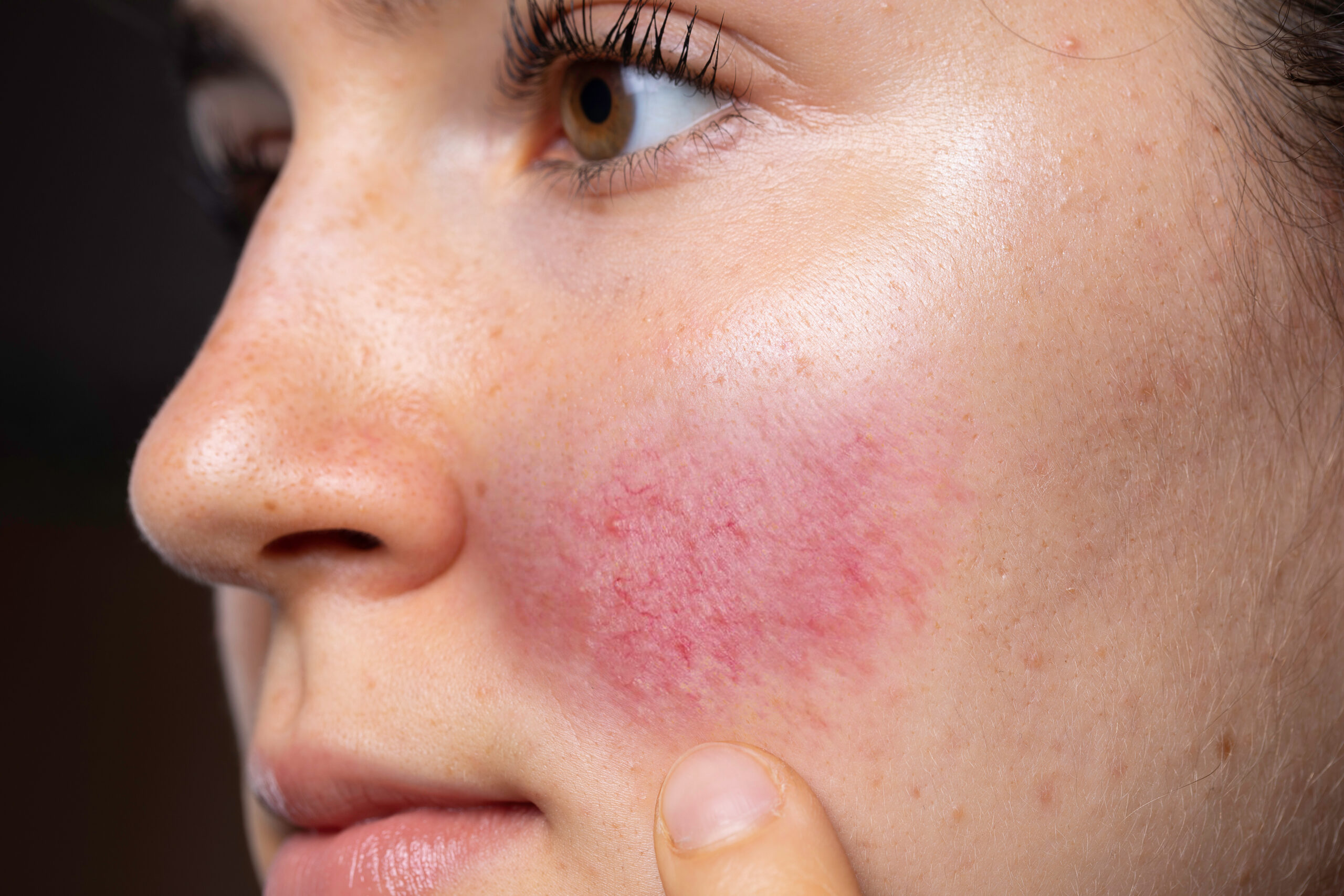
Rosacea is a chronic inflammatory skin condition that mainly affects the central face, causing redness, visible blood vessels and sometimes acne-like breakouts. At our clinic in Izmir, rosacea treatment is performed by a Dermatology and Venereology specialist with personalized and long-term care plans.
Assessment and suitable treatment can help control symptoms, but the course varies and progression or future flares cannot always be prevented.
What Is Rosacea?


Rosacea typically appears as persistent facial redness, flushing, sensitivity and small visible capillaries. In some patients, inflammatory papules and pustules may also develop.
Common triggers include sun exposure, hot beverages, spicy food, stress and temperature changes.
Types of Rosacea
- Erythematotelangiectatic rosacea (persistent redness and visible vessels)
- Papulopustular rosacea (redness with acne-like bumps)
- Phymatous rosacea (skin thickening, usually on the nose)
- Ocular rosacea (eye irritation and dryness)
These features can overlap. Treatment is chosen for the findings present, including eye symptoms, rather than assuming every patient fits one fixed subtype.
Rosacea Treatment Options
Rosacea cannot be completely cured, but it can be effectively controlled. Treatment may include:
- Topical anti-inflammatory medications
- Oral therapies when necessary
- Laser treatment for facial redness and visible vessels
- Skin barrier repair and medical skincare recommendations
Laser or light treatment may reduce selected visible vessels or persistent redness. Response differs between these targets and does not remove the underlying tendency to rosacea.
Laser Treatment for Rosacea

Laser and light devices target selected vascular findings but can also cause pain, redness, swelling, bruising, burns, pigment change or scarring. Device, skin tone, tanning, medicines and treatment parameters affect suitability. Multiple sessions may be considered; improvement and duration are not guaranteed.
Eye symptoms and daily care
Rosacea may affect the eyelids and eye surface, sometimes before obvious facial findings. Persistent dryness, grittiness, crusting or redness should be reported. New eye pain, marked light sensitivity or blurred vision needs urgent eye assessment; do not apply facial creams or start steroid eye drops on your own.
Gentle cleansing, moisturiser, broad-spectrum sun protection and identifying personal triggers support care. Avoid repeated harsh exfoliation or unsupervised facial steroid use. Skin-directed laser does not replace assessment and treatment of ocular rosacea.
Why Choose a Dermatologist in Izmir?
Rosacea requires long-term management and professional follow-up. A dermatologist can identify likely triggers and tailor a long-term plan to reduce the burden of flares; complete prevention is not assured.
What affects rosacea treatment cost in Izmir?
Cost depends on the rosacea subtype and severity, whether medical therapy, vascular laser or light-based treatment is required, the treatment area, number of planned sessions and follow-up needs. The treatment plan and fees are determined individually after dermatological assessment.
Book Your Consultation
If you are looking for rosacea treatment in Izmir, contact our clinic to schedule a consultation and receive a personalized management plan.