A lower-face plan begins with the cause—not the phrase “double chin”
At Dr. Orhan Demirer’s dermatology practice in Alsancak, interstitial laser treatment is considered only after separating local fat, skin laxity, chin support, platysma anatomy and gland prominence. The aim is proportionate contour improvement—not a promise of a surgical facelift without surgery.
- Dermatologist-led facial and neck anatomy assessment
- Focused on selected submental, jawline, lower-face and lateral-neck concerns
- Endo Smart Lift dual-wavelength 980/1470 nm diode platform
- Realistic swelling, recovery and result timing discussed before treatment

What is Endolift-style laser lipolysis?
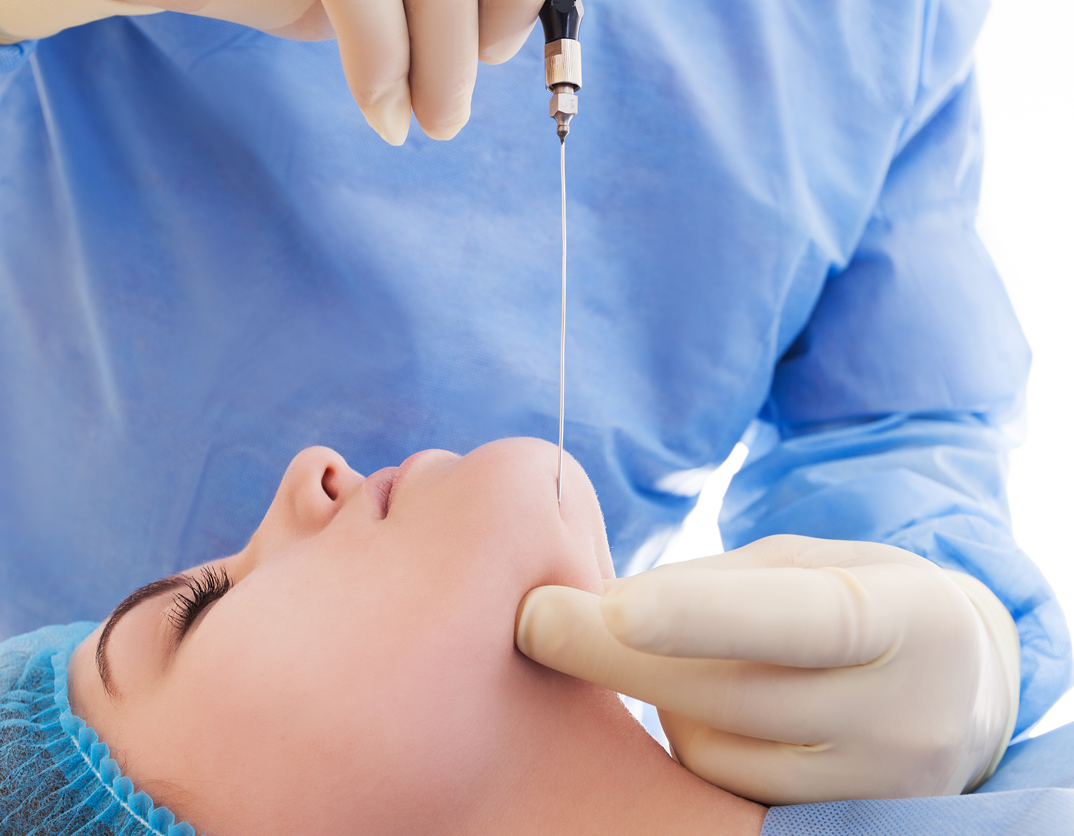
An extremely thin optical fibre is passed beneath the skin through a small entry point. Laser energy is delivered within the chosen tissue plane to create a controlled thermal effect. Depending on anatomy and the treatment plan, this may support limited fat reduction, tissue contraction and collagen remodelling.
Unlike a laser applied from the skin surface, the fibre works inside the subcutaneous or subdermal plane. The result depends not only on wavelength, but also on correct patient selection, fibre plane, movement, energy distribution, local thickness and nearby nerves and vessels.
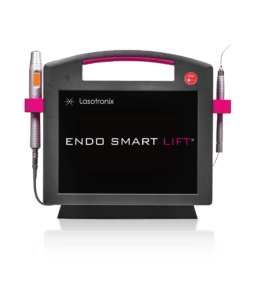
This page uses “Endolift” because it is the term many patients search for. Endolift®/EndoliftX® is a proprietary Eufoton 1470-nm platform and protocol. Dr. Orhan Demirer’s practice uses the Lasotronix Endo Smart Lift 980/1470 nm dual-wavelength diode system. The exact device and proposed method should always be named before consent.
A blurred jawline can have different causes
Two people who both describe a “double chin” may require completely different plans. The examination should identify which structures dominate the appearance.
Local submental fat
A small, pinchable fat compartment may respond differently from diffuse or high-volume fullness. Laser treatment is not equivalent to high-volume liposuction.
Skin laxity
Mild-to-moderate looseness may be considered for energy-based remodelling. Marked excess skin is less likely to be corrected by a minimally invasive device.
Chin projection
A retruded or short chin can make the neck angle look fuller even when fat is limited. Removing volume alone may not create the intended profile.
Platysma and neck bands
Muscle position and banding can affect the jawline and neck. Laser lipolysis does not replace every neuromodulator or surgical platysma procedure.
Submandibular glands
Prominent glands beneath the jaw can resemble fat but should not be treated as a superficial fat pocket.
Advanced tissue descent
Pronounced jowling, deep folds or substantial skin excess may require a surgical opinion rather than escalating non-surgical energy.
Endo Smart Lift 980/1470 nm at the practice
The platform combines two diode wavelengths. The 1470-nm wavelength is strongly absorbed by water and is used for controlled tissue heating; 980 nm has additional haemoglobin and tissue interactions. The physician selects the wavelength combination and energy delivery for the intended plane and endpoint.
This technical capability does not by itself determine safety or outcome. Anatomy, sterile technique, local anaesthesia, entry-point placement, fibre control, energy density and aftercare remain central.
- Device: Lasotronix Endo Smart Lift / Smart M family
- Wavelengths available: 980 nm and 1470 nm
- Method: percutaneous interstitial optical fibre
- Planned areas: submental, jawline, lower face and selected lateral neck
Brand names, regulatory indications and protocols are not interchangeable. A web search for “Endolift” should not be treated as proof that every clinic uses the same manufacturer, fibre, wavelength or technique.
Which areas may be assessed?
The practice uses this method selectively in the lower face and upper neck. Each zone is examined separately; suitability in one area does not mean all nearby zones should be treated.
Double-chin area
For selected local fat and mild laxity beneath the chin, after distinguishing fat from chin position and gland prominence.
Jawline
For selected loss of definition caused by limited local fullness or soft-tissue laxity along the mandibular edge.
Early jowls
For carefully selected mild lower-face heaviness; aggressive volume removal can worsen ageing or asymmetry.
Lateral neck
For selected superficial laxity or contour concerns where anatomy and skin thickness allow a proportionate plan.
Areas not routinely treated with this method
More treatment is not automatically better. Preserving facial fat and respecting anatomy can be as important as reducing volume.
Upper and mid-face fat compartments
The temples, eye area, cheeks and central mid-face contain structural fat compartments that support a youthful contour. Unnecessary fat reduction can produce hollowing, skeletonisation or an older appearance.
Arms, abdomen, legs and body areas
This practice does not position the technique as body-contouring liposuction. Larger-volume body concerns require different assessment, equipment, monitoring and sometimes surgical care.
The treatment also does not remove a prominent submandibular gland, advance a retruded chin, repair significant platysma separation or excise advanced skin excess.
Who may be suitable—and who may need another plan?
Assessment may be relevant for
- Mild-to-moderate localised submental fullness
- Early loss of jawline definition or mild jowling
- Mild-to-moderate lower-face or upper-neck skin laxity
- Stable weight and realistic expectations
- Adults who accept swelling, bruising and gradual recovery
- Patients able to follow compression and aftercare instructions when prescribed
Another method or postponement may be safer
- Pregnancy or breastfeeding for an elective cosmetic procedure
- Active infection, open wound or inflammatory skin disease in the area
- Uncontrolled medical illness, bleeding disorder or unsuitable medication profile
- Marked skin excess, pronounced jowls or need for a surgical-level change
- Fullness mainly caused by chin retrusion, muscle anatomy or gland prominence
- Expectation of immediate, guaranteed or perfectly symmetrical results
Do not stop anticoagulants, antiplatelet medicines or any prescribed treatment on your own. All medicines, supplements, allergies, prior procedures, scarring tendency and relevant medical history must be discussed with the physician.
How the procedure is planned
The treatment itself is only one part of the process. The plan begins by deciding whether laser lipolysis is the right tool for the dominant anatomical concern.
History and goals
Weight change, prior procedures, medicines, allergies, healing history and the desired profile change are reviewed.
Photographs and examination
The jawline and neck are evaluated at rest and during movement, from the front, oblique and profile views.
Anatomical diagnosis
Fat thickness, skin recoil, chin projection, platysma, glands, asymmetry and surgical indications are separated.
Area and entry map
The intended zones, boundaries and no-go anatomy are marked; treating every visible fullness is not the objective.
Anaesthesia and preparation
Local or tumescent anaesthesia and sterile preparation are selected according to the plan and medical assessment.
Controlled fibre passes
The optical fibre is moved in the chosen plane while energy delivery and clinical tissue response are monitored.
Compression and instructions
Dressing, compression and care advice are individualised; they should not be copied from a generic social-media protocol.
Clinical follow-up
Early healing and later contour are reviewed before any additional procedure is considered.
What may happen after treatment?
Calling the procedure “minimally invasive” does not mean there is no downtime. Individual response varies with the treated area, tissue volume, energy delivery, bruising tendency and aftercare.
Swelling, tenderness, bruising, tightness, mild drainage from an entry point or temporary asymmetry may occur.
Oedema can remain visible and may fluctuate. Some patients need longer; the early swollen contour is not the result.
As swelling settles, contour change may become easier to assess. Firmness, small indurations or altered sensation can still be present.
Tissue remodelling may continue. A final judgement or additional treatment decision should allow adequate healing time.
Follow the physician’s area-specific instructions
Compression, cleansing, activity limits, pain relief and review timing vary with the procedure. The treating physician’s written instructions take priority over general information online.
Plan work, social events and travel around the possibility of obvious swelling or bruising for at least 7–10 days. A very short visit may not allow adequate review if an unexpected reaction develops.
- Keep entry sites clean and dry as instructed.
- Use prescribed compression for the stated duration if advised.
- Avoid massage, intense heat and strenuous activity until cleared.
- Do not self-treat lumps or asymmetry with aggressive pressure.
- Attend recommended early and later follow-up.
- Contact the practice promptly if symptoms worsen unexpectedly.
What the procedure may—and may not—change
Selected localised submental fullness, early jawline blurring, mild lower-face heaviness and modest skin laxity in appropriately chosen patients.
A surgical facelift result, a completely sharp jawline, perfect symmetry, scar-free healing, a specific percentage of tightening or a permanent result unaffected by ageing and weight change.
Chin filler or surgery for projection, neuromodulator for selected platysma activity, liposuction for greater fat volume, or surgical lifting for advanced tissue excess.
Possible side effects, complications and warning signs
Interstitial laser treatment is a medical procedure performed beneath the skin. It is less invasive than open surgery, but it is not risk-free.
Expected or relatively common
Pain or tenderness, swelling, bruising, temporary numbness or altered sensation, tightness, small entry-point crusts, firmness, induration and temporary asymmetry can occur.
Less common but important
Infection, burns or skin injury, prolonged oedema, seroma or haematoma, contour irregularity, persistent nodules, pigment change, scarring, unwanted fat loss or hollowing and unsatisfactory results are possible.
Anatomy-related complications
Nerve irritation or injury with weakness or altered sensation, vascular injury and damage to unintended structures are uncommon but clinically significant risks.
Need for further treatment
Asymmetry, under-correction, over-correction or prolonged irregularity may require observation, medical treatment, another procedure or surgical assessment.
Seek prompt medical assessment for severe or increasing pain, rapidly enlarging swelling, spreading redness or fever, blistering or dark/grey skin colour, new marked facial or lip weakness, pus, breathing difficulty or swallowing difficulty. Breathing or swallowing difficulty requires urgent emergency care.
Device terminology was cross-checked against the manufacturers’ public technical information for the Lasotronix Smart M 980/1470 nm platform and the proprietary Eufoton EndoliftX® platform. Manufacturer information does not replace individual diagnosis, local regulatory requirements or informed consent.
Endolift, HIFU, injection lipolysis, liposuction or surgery?
These options do not deliver the same effect. The best comparison starts with the dominant tissue and the scale of change expected.
| Method | Primary role | Recovery profile | Important limitation |
|---|---|---|---|
| Interstitial 980/1470 nm laser | Selected small fat compartments plus soft-tissue contraction in the lower face/upper neck | Entry points, swelling, bruising, tenderness and possible 7–10+ days of visible oedema | Not a substitute for high-volume liposuction or a surgical neck/facelift |
| HIFU | Non-invasive ultrasound energy at selected tissue depths, mainly for mild laxity | No fibre entry; tenderness or swelling may occur, with gradual response | Does not remove a substantial local fat compartment or advanced excess skin |
| Injection lipolysis | Chemical reduction of selected small fat pockets over one or more sessions | Swelling can be marked; response and session need vary | Does not provide the same fibre-delivered thermal contraction and is not suitable for every neck anatomy |
| Liposuction | Mechanical removal of larger or more defined fat volume | Surgical recovery, compression and procedure-specific risks | Skin contraction and anatomy still determine the final contour |
| Chin/jawline filler | Projection or structural support when bone/chin position dominates | Injection-related swelling and bruising; vascular risk requires medical expertise | Adds support or volume; it does not remove submental fat |
| Surgical neck or facelift | Advanced skin excess, platysma work and larger structural change | Greater intervention and recovery, with surgical risks | More invasive, but may be the proportionate option when non-surgical methods cannot meet the goal |
Endolift prices in Izmir
Pricing depends on the anatomical diagnosis, number and size of zones, procedure complexity, anaesthesia and consumables, whether one or both sides are treated, and the planned follow-up. A limited submental area and a combined jawline, lower-face and neck procedure are not the same treatment.
A fixed online fee or package cannot show whether the fullness is actually fat, whether the skin can contract or whether another method is more appropriate. The proposed scope and fee are discussed after assessment.
Share front, oblique and profile photographs for scheduling guidance. Images cannot replace an in-person examination or guarantee same-day treatment.
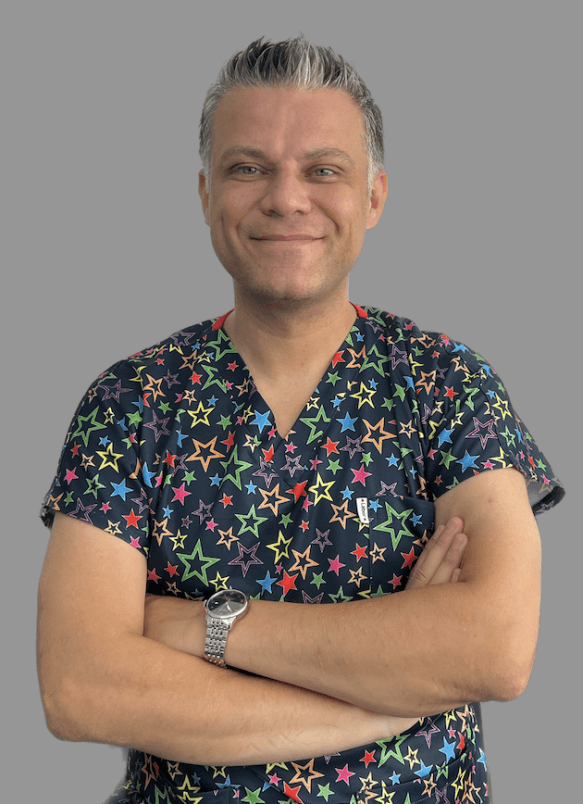
Lower-face contour planning with Dr. Orhan Demirer
Dr. Orhan Demirer is a specialist dermatologist practising in Alsancak, Izmir. The consultation considers skin quality, fat distribution, skeletal support, platysma, glands, asymmetry, medicines, previous procedures and the amount of change that can realistically be achieved without surgery.
If interstitial laser treatment is not the proportionate option, observation, weight stability, HIFU, structural filler assessment, botulinum toxin assessment, liposuction or a surgical opinion may be discussed.
- Specialist in dermatology
- Facial anatomy and skin assessment
- Multiple energy-based and injectable options
- English communication available
Planning Endolift treatment in Izmir from abroad
International patients should allow time for examination, visible swelling and access to follow-up. A photograph can help with appointment planning, but it cannot establish tissue planes, nerve anatomy, skin recoil or whether treatment will be performed.
Share your preferred dates, main concern, medical history, medicines and previous facial procedures.
Do not schedule the procedure immediately before a major event. Swelling or bruising may remain visible for 7–10 days or longer.
Ask when review is expected and how to obtain assessment after returning home if an unexpected symptom develops.
Frequently asked questions about Endolift in Izmir
Is Endolift the same at every clinic?
No. Endolift®/EndoliftX® is a proprietary Eufoton 1470-nm platform and protocol, while “Endolift” is also used loosely online for interstitial fibre-laser procedures. This practice uses the Lasotronix Endo Smart Lift 980/1470 nm diode system. Ask for the exact device, fibre and method before consent.
Which areas does Dr. Orhan treat with this method?
The method is considered selectively for the submental area, jawline, early lower-face/jowl concerns and lateral upper neck. It is not routinely used here to reduce fat in the upper face, around the eyes or across the body.
Is it a non-surgical facelift?
It is less invasive than open surgery, but “non-surgical facelift” can overstate the result. It may improve selected local fat and mild-to-moderate laxity; it does not excise excess skin, reposition all facial tissues or reproduce a surgical facelift.
Is the treatment completely incision-free?
The fibre is introduced through a small percutaneous entry point. There is no long surgical incision, but entry-point crusting, pigment change or a small scar is possible.
What type of anaesthesia is used?
Local or tumescent anaesthesia may be used depending on the area and plan. The medical assessment and the physician’s protocol determine preparation; “no anaesthesia” should not be promised universally.
How long does swelling last?
Visible oedema may last around 7–10 days and sometimes longer. Bruising, tightness or tenderness can accompany it. The amount varies with tissue volume, treatment area, energy delivery and individual healing.
When will I see the result?
Some early contour change may be obscured by swelling. Improvement often becomes easier to judge around one month and remodelling may continue for approximately three months. Timing and degree of change vary.
Is one session enough?
There is no universal session number. Some selected patients may be treated once, while others may need observation, another method or a staged plan. An additional session should not be promised before the first response has healed.
Can Endolift remove a large double chin?
It is not high-volume liposuction. If the fat compartment is substantial, the skin excess is advanced or the fullness has another anatomical cause, liposuction, surgery or a different plan may be more suitable.
Can it sharpen a weak jawline?
Only when the blurred outline is caused by a treatable soft-tissue component. A retruded chin or skeletal proportion may need structural support or surgical assessment; fat reduction alone can be disappointing.
Can Endolift be used around the eyes or cheeks?
This practice does not routinely use the method for upper- or mid-face fat reduction. Facial fat compartments support youthful contour, and unnecessary reduction may create hollowing or an aged appearance.
Can it be combined with HIFU, filler or botulinum toxin?
Sometimes, but anatomy and timing determine the sequence. Combining energy and injectable treatments automatically can increase swelling or make the result difficult to interpret. Each method should have a defined target.
What are the most important risks?
Swelling, bruising, pain, numbness, firmness and temporary asymmetry are common considerations. Infection, burns, prolonged oedema, contour irregularity, unwanted fat loss, scarring, nerve or vascular injury and an unsatisfactory result are less common but important.
How much does Endolift cost in Izmir?
The fee depends on the anatomical diagnosis, zones treated, complexity, consumables, anaesthesia and follow-up plan. A personal treatment scope and fee are discussed after assessment.
Can I fly home immediately after treatment?
Travel is not automatically prohibited, but immediate departure can make early review difficult. Plan around visible swelling, access to medical care and the treating physician’s advice rather than treating the procedure as a same-day tourism activity.
First determine whether the concern is fat, laxity, chin support, muscle or gland anatomy
A personal lower-face plan begins with examination and realistic recovery—not with a fixed “one-device facelift” package.